Water Damage Restoration
Water Damage Restoration vs. Water Damage Repair: What's the Difference?
6 min read · Last reviewed July 28, 2026
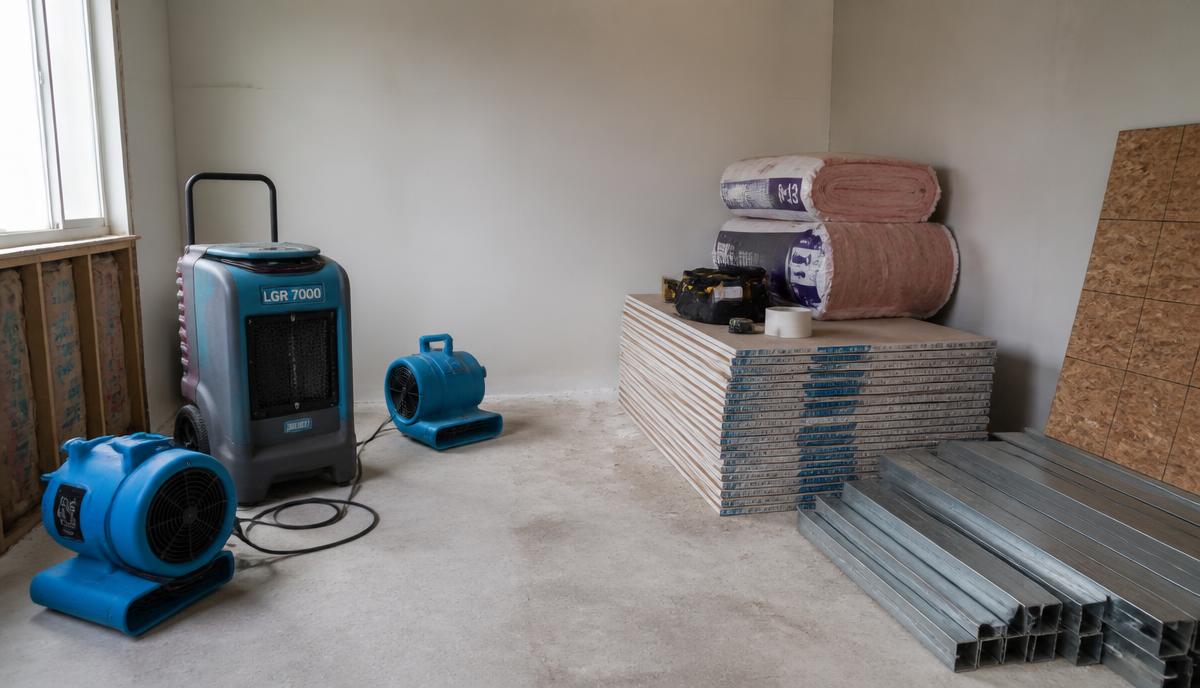
These two words get used interchangeably, which causes real confusion when reading estimates or talking to an insurer. They describe different work, done at different times, sometimes by different companies.
Key takeaways
- Restoration = extract, dry, clean, verify. It happens first and is time-critical.
- Repair = replace and rebuild. It happens after the structure is dry.
- Some contractors do both; many do only one.
- Estimates and claims often separate the two, sometimes as different payments.
Side by side
- Goal — restoration: stop damage spreading and return materials to normal moisture. Repair: return the property to pre-loss appearance and function.
- Timing — restoration: within hours. Repair: after verified drying, often days or weeks later.
- Typical work — restoration: extraction, removal of unsalvageable materials, air movement, dehumidification, cleaning, monitoring. Repair: drywall, insulation, flooring, trim, cabinetry, paint, structural work.
- Measured by — restoration: moisture readings. Repair: finished condition and workmanship.
- Urgency — restoration: high; delay increases scope. Repair: scheduled.
Why the order cannot be reversed
Rebuilding over wet materials seals moisture into the assembly. It will keep evaporating into the cavity, condense on cool surfaces, and eventually show up as staining, odour, or peeling paint — behind a brand-new wall.
This is the single most common avoidable failure in water damage work, and it is why any credible repair scope begins with moisture verification.
Who does what
Restoration companies are equipped for the emergency phase: pumps, air movers, dehumidifiers, meters, and 24-hour response. General contractors handle the rebuild: framing, drywall, flooring, finishes, and permits where required.
Full-service firms cover both, which simplifies coordination. Either way, ask directly where one company's scope ends so nothing falls into the gap.
How it shows up in a claim
Insurers commonly treat mitigation (restoration) and rebuild (repair) as separate line groups, and may pay them at different times. Mitigation is often paid quickly because policies require prompt action; the rebuild is settled once a scope is agreed.
Keep the two sets of documents separate — drying logs and readings on one side, repair scope and invoices on the other.
Questions homeowners often ask
Do I need both restoration and repair?
Most losses need restoration. Whether repairs follow depends on whether any materials were damaged beyond drying.
What does water damage restoration include?
Water extraction, removal of unsalvageable materials, structural drying with air movers and dehumidifiers, cleaning and sanitising, and documented moisture monitoring.
Frequently asked questions
Continue reading
- What Happens During the Water Damage Restoration Process?
A step-by-step walkthrough of the water damage restoration process: inspection, water classification, extraction, removal, drying, monitoring, and clearance.
- Water Damage Repairs in Mobile AL: When Restoration Is Not Enough
Understand when water-damaged materials need repair or replacement rather than drying — drywall, flooring, ceilings, and structural components — with local context for Mobile, Alabama.
- How Long Does Water Damage Take to Dry?
Typical drying timelines by material and severity, what makes drying slower, and how moisture readings — not appearance — determine when a structure is actually dry.
- What Homeowners Should Know About Water Damage and Insurance Claims
How water damage claims are generally evaluated, the difference between sudden damage and gradual leaks, what to document, and the order of steps that protects your claim.
- Water Damage Restoration Cost in Mobile, AL: What Homeowners Should Know
Understand what drives water damage restoration costs in Mobile, Alabama — from extraction and drying to hidden moisture, materials, insurance, and how to read an estimate.
Last reviewed July 28, 2026. This guide is general educational information and is not a substitute for an on-site assessment of your property.