Water Damage Restoration
How Long Does Water Damage Take to Dry?
6 min read · Last reviewed July 30, 2026
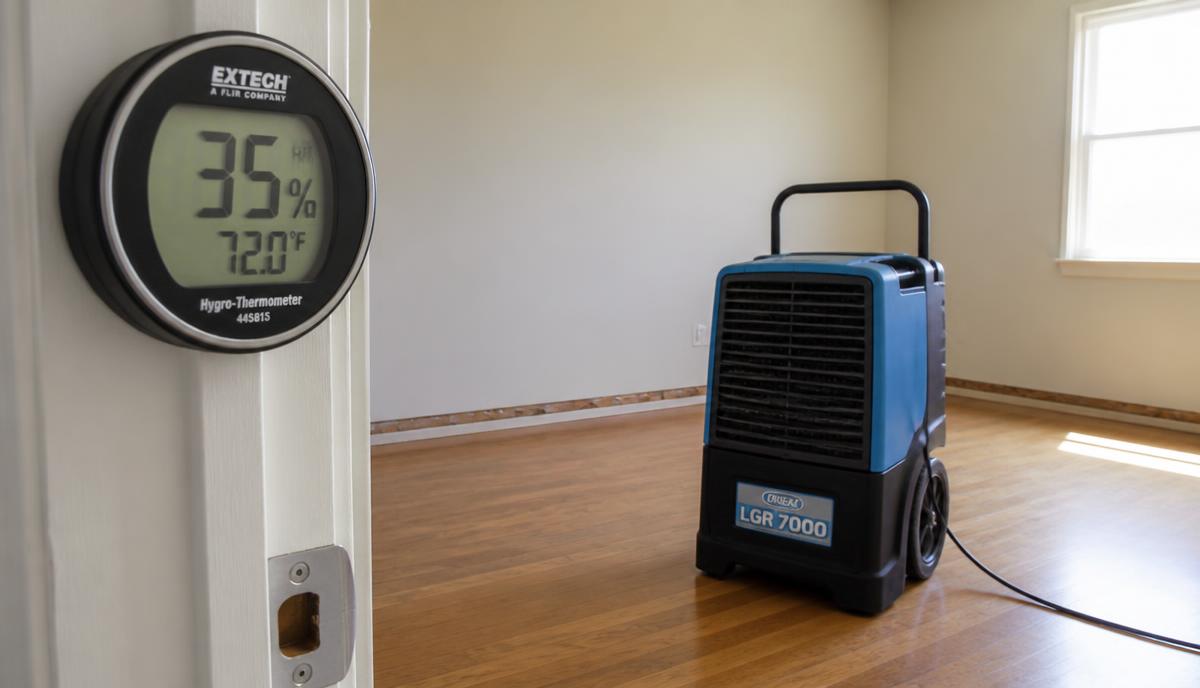
Three to five days is the common answer, and it is right often enough to be useful and wrong often enough to be frustrating. Drying time depends on the material, the volume of water, the humidity, and how quickly equipment started.
This guide explains what drives the timeline and how to tell where you are in it.
Key takeaways
- Most contained, clean-water losses dry in three to five days with proper equipment.
- Dense and layered materials — plaster, hardwood, subfloor sandwiches — take longer.
- High ambient humidity slows every part of the process.
- Equipment removal should follow verified readings, not the calendar.
Typical timelines
- Surface water on tile or sealed concrete: hours to a day
- Wet carpet with pad removed: one to three days
- Drywall wet along the bottom of a wall: three to five days
- Wall cavity with insulation left in place: often a week or more, if it can be dried at all
- Hardwood over subfloor: five days to two weeks, sometimes with specialty mat systems
- Plaster and dense masonry: one to several weeks
What makes drying slower
- Delay before equipment started — every hour of soak adds drying time
- High outdoor humidity, which limits how much moisture the air can absorb
- Materials that block airflow: cabinetry, vinyl flooring, vapour barriers, insulation
- Low temperatures, which reduce evaporation
- Undersized or badly positioned equipment
- Multiple layers — flooring over underlayment over subfloor traps moisture between them
How professional drying is managed
A drying plan sets a target moisture content based on unaffected control readings, then places air movers to create airflow across wet surfaces and dehumidifiers to pull the resulting vapour out of the air.
Readings are taken daily at the same marked points. If a point stops improving, the plan changes — more equipment, a different position, or opening a cavity so air can reach the wet material.
Knowing when it is done
The finish line is documented, not felt: affected materials read within a normal range of comparable unaffected materials, and stay there over consecutive readings.
If equipment is pulled before that point, moisture that is still inside the assembly redistributes and the surface re-wets. That is why 'it felt dry so we stopped' is a costly conclusion.
Questions homeowners often ask
Can I speed up drying?
Yes — remove wet materials that block airflow, keep the space closed and dehumidified, maintain a moderate temperature, and add equipment rather than waiting longer with too little.
Do I have to run equipment overnight?
Yes. Drying is continuous. Turning equipment off at night can add days to the timeline.
Frequently asked questions
Continue reading
- What Happens During the Water Damage Restoration Process?
A step-by-step walkthrough of the water damage restoration process: inspection, water classification, extraction, removal, drying, monitoring, and clearance.
- How to Find Hidden Water Damage Before It Gets Worse
Hidden water damage shows up as smells, stains, and small changes long before it becomes visible. Learn where to look, what the warning signs mean, and which tools confirm moisture.
- When Should Wet Drywall Be Repaired or Replaced?
How to judge whether water-damaged drywall can be dried and saved or has to be cut out, including flood cuts, insulation, and what to check before closing a wall.
- How Humidity Can Make Water Damage Problems Worse
Why high indoor humidity slows drying, causes condensation damage without any leak, and how homeowners can measure and control moisture in the air.
Last reviewed July 30, 2026. This guide is general educational information and is not a substitute for an on-site assessment of your property.