Hidden Damage & Moisture
How Humidity Can Make Water Damage Problems Worse
6 min read · Last reviewed July 22, 2026
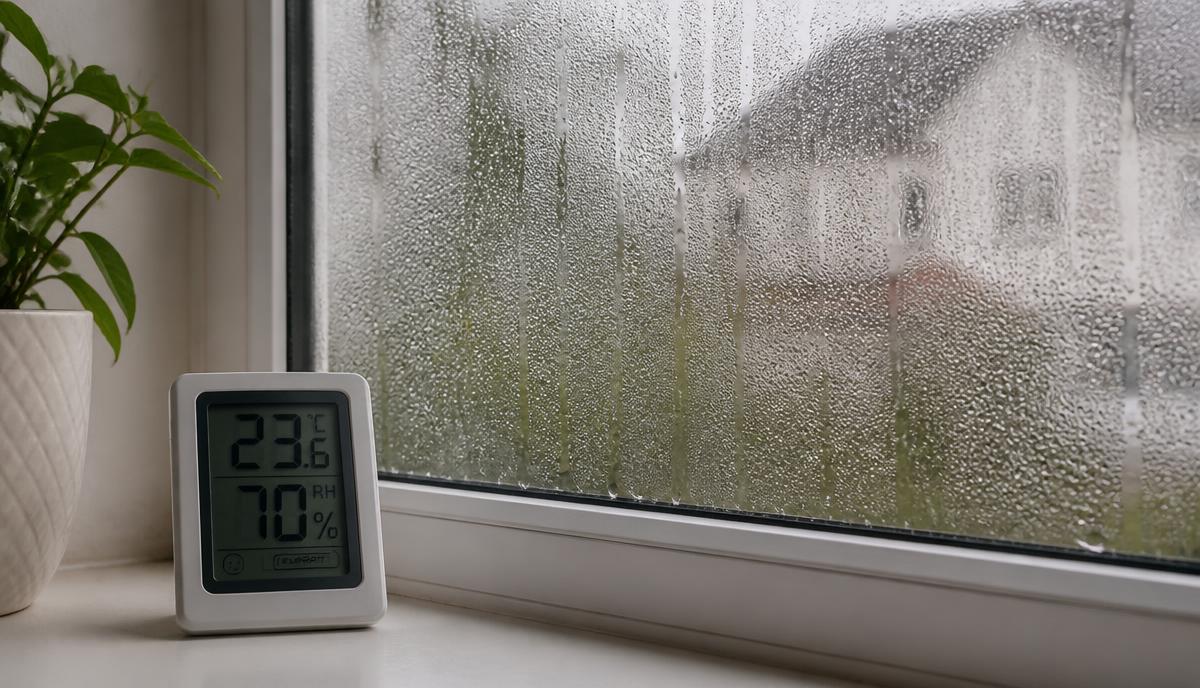
Humidity is the background condition that decides how bad a water event becomes. The same spill dries in a day in a controlled house and lingers for a week in a humid one.
Key takeaways
- Aim to keep indoor relative humidity roughly between 40% and 55%.
- Air can only absorb moisture if it is drier than the wet material — humid air stalls drying.
- Condensation damages buildings without any leak at all.
- A cheap hygrometer is the most useful moisture tool a homeowner can own.
Why humid air slows drying
Evaporation depends on a difference in vapour pressure between the wet material and the surrounding air. When the air is already close to saturated, that difference shrinks and evaporation nearly stops.
This is why opening windows during a humid summer can make a drying job worse, and why dehumidification — not just fans — is the core of professional drying.
Damage without a leak
When humid air meets a surface below its dew point, water condenses. Cold supply pipes, uninsulated ducts, exterior walls behind furniture, and windows all provide those surfaces.
The result looks exactly like a leak: staining, peeling paint, swollen trim, musty smells. Homeowners often spend a long time looking for a pipe that does not exist.
Measuring it
Put an inexpensive hygrometer in two or three rooms, including any that feel damp. Note readings morning and evening for a week.
Persistent readings above about 60% indicate a moisture load that needs addressing. A single room much higher than the rest points at a local source: a bathroom without working ventilation, a crawlspace hatch, a hidden leak.
Controlling it
- Run bathroom exhaust fans during showers and for twenty minutes after
- Vent the clothes dryer outdoors, and check the duct for blockage
- Use the kitchen range hood when cooking
- Keep HVAC condensate lines clear so the system actually dehumidifies
- Add a dehumidifier in problem rooms and drain it continuously
- Install a vapour barrier in the crawlspace and manage its ventilation
- Leave a gap behind furniture on exterior walls so air can move
Questions homeowners often ask
Can water damage cause problems after the surface looks dry?
Yes. Cavities and layered assemblies hold moisture long after surfaces dry, and high ambient humidity keeps them from releasing it.
What indoor humidity is too high?
Sustained readings above roughly 60% relative humidity are a problem in most homes; 40–55% is a reasonable target.
Frequently asked questions
Continue reading
- How to Find Hidden Water Damage Before It Gets Worse
Hidden water damage shows up as smells, stains, and small changes long before it becomes visible. Learn where to look, what the warning signs mean, and which tools confirm moisture.
- How Long Does Water Damage Take to Dry?
Typical drying timelines by material and severity, what makes drying slower, and how moisture readings — not appearance — determine when a structure is actually dry.
- How to Prevent Recurring Water Damage
A practical maintenance approach to stopping repeat water damage: seasonal checks, plumbing and appliance upkeep, drainage, leak detection, and knowing your shutoffs.
- Common Causes of Water Damage in Alabama Homes
The recurring sources of water damage in Gulf Coast and Alabama homes — roofing, plumbing, appliances, HVAC condensate, drainage, and humidity — and what each one looks like early.
Last reviewed July 22, 2026. This guide is general educational information and is not a substitute for an on-site assessment of your property.