Hidden Damage & Moisture
How to Find Hidden Water Damage Before It Gets Worse
8 min read · Last reviewed August 8, 2026
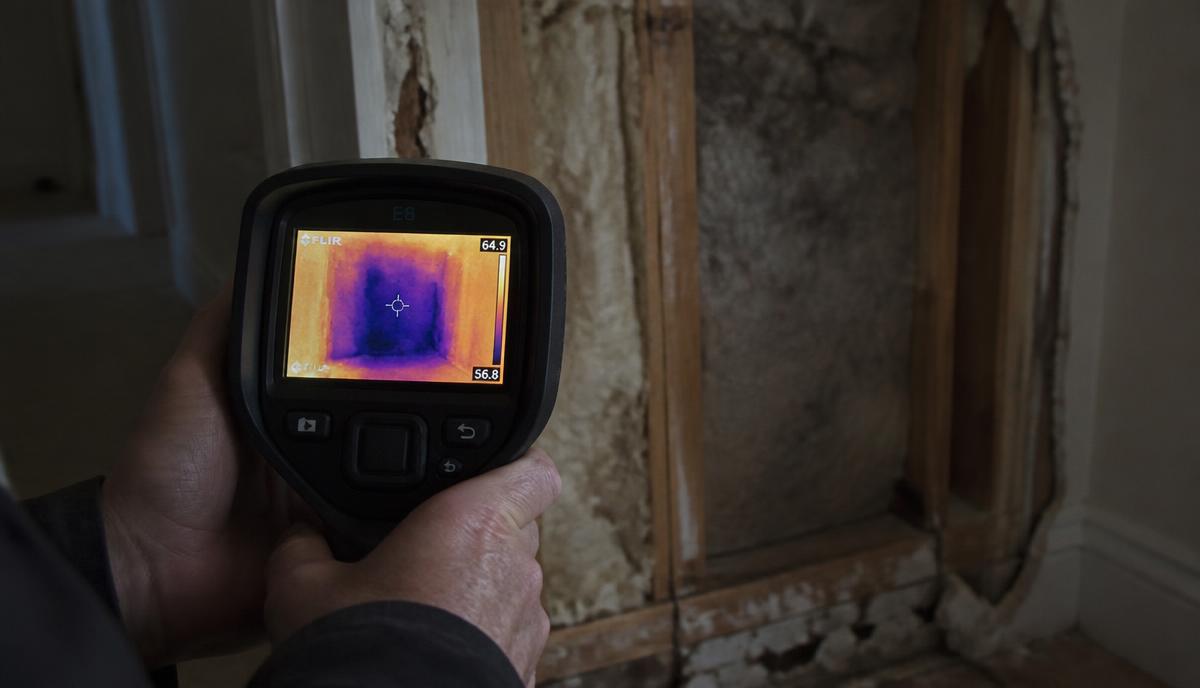
Most serious water damage was quiet for a while first. A supply line weeping behind a cabinet, a flashing gap at a chimney, a condensate line dripping into a wall — none of it announces itself.
This guide covers the signals that suggest concealed moisture, the places worth checking regularly, and how professionals confirm what is behind a surface.
Key takeaways
- Smell is often the earliest reliable warning sign.
- Water rarely appears where it entered — look uphill along framing and pipe runs.
- Moisture meters and thermal cameras confirm; eyes and noses only suggest.
- Surfaces can dry while the cavity behind them stays wet for weeks.
Warning signs worth investigating
Any one of these can have an innocent explanation. Two or three together in the same area is a strong indication that something behind the surface is wet.
- A musty or earthy smell that is stronger in one room, in a closet, or near the floor
- Paint that bubbles, blisters, or shows a faint tide line
- Drywall tape lifting, nail pops appearing in a line, or corner beads cracking
- Flooring that cups, lifts at seams, or feels spongy underfoot
- Baseboards separating from the wall, or trim with a swollen bottom edge
- A water bill that climbs without an obvious explanation
- Condensation on interior walls, or a room that is persistently more humid than the rest of the house
- Insects that prefer damp wood appearing indoors
Where to look first
Under and behind plumbing
- Sink base cabinets — feel the back corners, not just the visible floor
- Behind and beneath the dishwasher and refrigerator
- Water heater pan and the wall behind it, especially in attic and closet installations
- Washing machine hoses at the connection points
- Toilet bases — a rocking toilet often means a soft subfloor
The building envelope
- Ceilings below bathrooms and below roof valleys
- Window and door headers and corners after wind-driven rain
- Where a roof meets a wall, chimney, or skylight
- Attic sheathing — look for dark staining or daylight at penetrations
- Crawlspaces and slab perimeters after heavy rainfall
Tools that confirm what you suspect
A pin-type moisture meter reads moisture content directly by making two small holes. A pinless meter scans without marking the surface but reads only near the surface. Both need a comparison reading from an unaffected area to be meaningful.
Thermal imaging does not see moisture — it sees temperature differences. Evaporating water cools a surface, so a wet area often appears as a cool patch. It is excellent for finding where to check and useless on its own as proof.
Hygrometers measure the humidity of the air. A room persistently above roughly 60% relative humidity when the rest of the house sits lower is worth investigating.
Why problems appear after the surface looks dry
Surfaces dry first because they are exposed to air. Wall cavities, subfloor sandwiches, and insulation behind drywall are sealed away from airflow and can hold moisture for weeks after everything looks fine.
That is the mechanism behind the common experience of a leak that was 'handled' in spring turning into a smell in summer. The water never left; it just stopped being visible.
Questions homeowners often ask
Can water damage occur behind walls?
Frequently. Supply lines, drain stacks, and wind-driven rain all deposit water inside cavities where nothing is visible until the drywall or paint reacts.
How do you know if moisture is behind drywall?
Compare moisture-meter readings from the suspect area against an unaffected wall in the same room. A meaningful difference indicates moisture; matching readings suggest it is dry.
What does hidden water damage look like?
Usually subtle: a faint stain edge, slightly wavy drywall, lifted tape, a soft spot in the floor, or a smell without a visible cause.
Frequently asked questions
Continue reading
- How Humidity Can Make Water Damage Problems Worse
Why high indoor humidity slows drying, causes condensation damage without any leak, and how homeowners can measure and control moisture in the air.
- How Long Does Water Damage Take to Dry?
Typical drying timelines by material and severity, what makes drying slower, and how moisture readings — not appearance — determine when a structure is actually dry.
- How to Prevent Recurring Water Damage
A practical maintenance approach to stopping repeat water damage: seasonal checks, plumbing and appliance upkeep, drainage, leak detection, and knowing your shutoffs.
- What to Do in the First 24 Hours After Water Damage
A clear, ordered plan for the first day after discovering water damage: safety, stopping the source, documentation, extraction, and the decisions that affect your insurance claim.
Last reviewed August 8, 2026. This guide is general educational information and is not a substitute for an on-site assessment of your property.