Water Damage Repairs
When Should Wet Drywall Be Repaired or Replaced?
7 min read · Last reviewed August 5, 2026
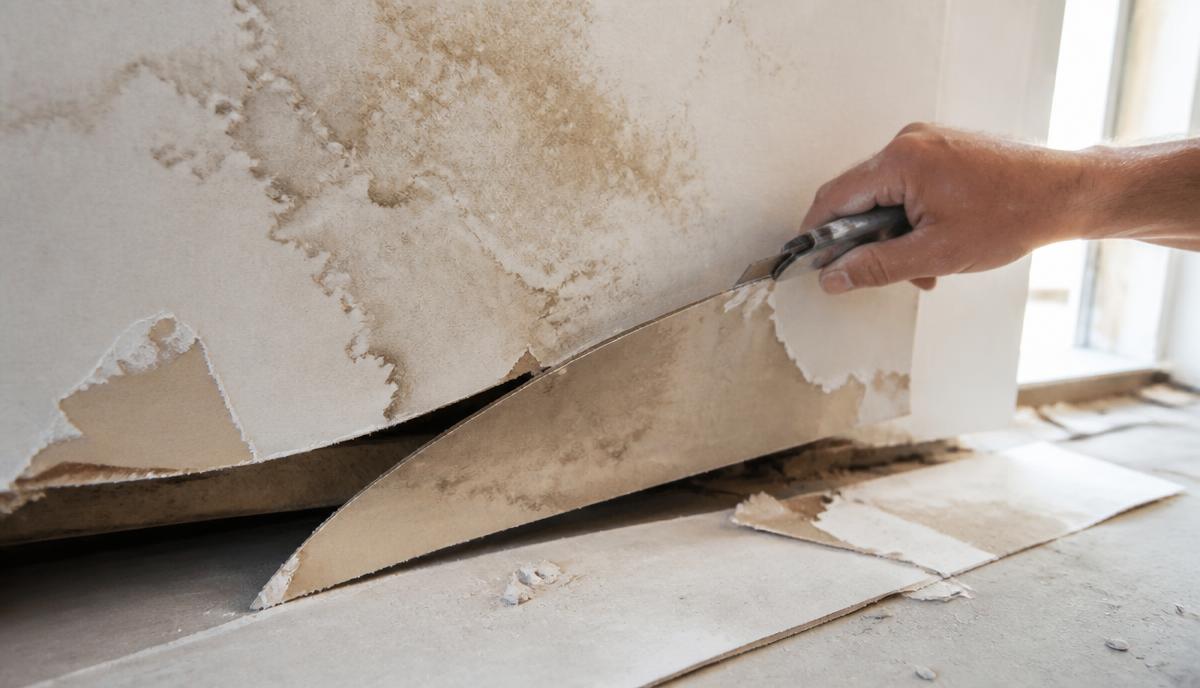
Drywall is cheap to replace and expensive to get wrong. Saving a wall that should have been removed leads to odour and staining months later; removing a wall that could have been dried adds cost and disruption for nothing.
These are the factors that decide it.
Key takeaways
- Clean water, caught early, small area: often dried in place.
- Sagging, crumbling, or soft board is always replaced.
- Contaminated water means removal regardless of how the board looks.
- Insulation behind the wall usually decides the outcome more than the drywall itself.
Assessing the board
Press gently on the affected area. Firm board that holds its shape is a candidate for drying. Board that dents, feels spongy, or leaves gypsum on your hand has lost integrity and will not recover.
Look at the seams. Lifting tape and popped fasteners mean the paper facing has already released, which is a structural failure of the panel even if the rest looks fine.
- Firm, lightly stained, clean water, under 24 hours wet — usually dryable
- Soft, swollen, sagging, or crumbling — replace
- Any drywall contacted by sewage or floodwater — replace
- Board with wet insulation behind it — open the cavity and reassess
What a flood cut is and why it is used
A flood cut removes drywall in a straight horizontal line above the highest point water reached — commonly 12 to 24 inches above the floor. It exposes the cavity so framing and insulation can be inspected and dried, and it gives a clean line for the replacement piece.
Cutting above the water line matters because water wicks upward. Cutting exactly at the visible line usually leaves wet board in place.
The insulation question
Fibreglass batts hold water in the cavity and compress when wet, losing both their insulating value and their ability to dry. Cellulose absorbs heavily and slumps. Closed-cell foam is more tolerant, but it also traps water against framing where you cannot see it.
If the wall cavity held wet insulation for more than a day, removing it is usually the reliable path — the drywall is often replaced simply to access it.
Before you close the wall
- Take moisture readings on the framing itself, not just the drywall
- Photograph the open cavity, including the leak source
- Confirm the source is repaired and tested under pressure or under rain
- Check electrical boxes and wiring for corrosion or standing water
- Let the cavity reach control readings before hanging new board
Finishing and matching
New drywall needs taping, three coats of compound, and texture matching. Texture is where most patches announce themselves — knockdown and orange peel are difficult to blend without practice.
Priming the repair with a stain-blocking primer prevents residual tannin or water staining from bleeding through the new paint, which is a common frustration after ceiling repairs.
Questions homeowners often ask
Can water-damaged drywall be repaired?
Yes, when it is still firm, was wet with clean water, and dried quickly. Board that has softened, swollen, or sagged should be cut out and replaced.
How high should I cut wet drywall?
Above the highest moisture reading, not the highest visible stain — commonly a foot or two above the water line so the cut lands cleanly and captures wicked moisture.
Frequently asked questions
Continue reading
- Water Damage Repairs in Mobile AL: When Restoration Is Not Enough
Understand when water-damaged materials need repair or replacement rather than drying — drywall, flooring, ceilings, and structural components — with local context for Mobile, Alabama.
- How Long Does Water Damage Take to Dry?
Typical drying timelines by material and severity, what makes drying slower, and how moisture readings — not appearance — determine when a structure is actually dry.
- How to Find Hidden Water Damage Before It Gets Worse
Hidden water damage shows up as smells, stains, and small changes long before it becomes visible. Learn where to look, what the warning signs mean, and which tools confirm moisture.
- Water Damage Restoration vs. Water Damage Repair: What's the Difference?
Restoration dries and stabilises; repair rebuilds. Understand the difference, how the two phases connect, who does each, and how it affects estimates and insurance.
- Water Damage Restoration Cost in Mobile, AL: What Homeowners Should Know
Understand what drives water damage restoration costs in Mobile, Alabama — from extraction and drying to hidden moisture, materials, insurance, and how to read an estimate.
Last reviewed August 5, 2026. This guide is general educational information and is not a substitute for an on-site assessment of your property.