Water Damage Repairs
Water Damage Repairs in Mobile AL: When Restoration Is Not Enough
8 min read · Last reviewed August 10, 2026
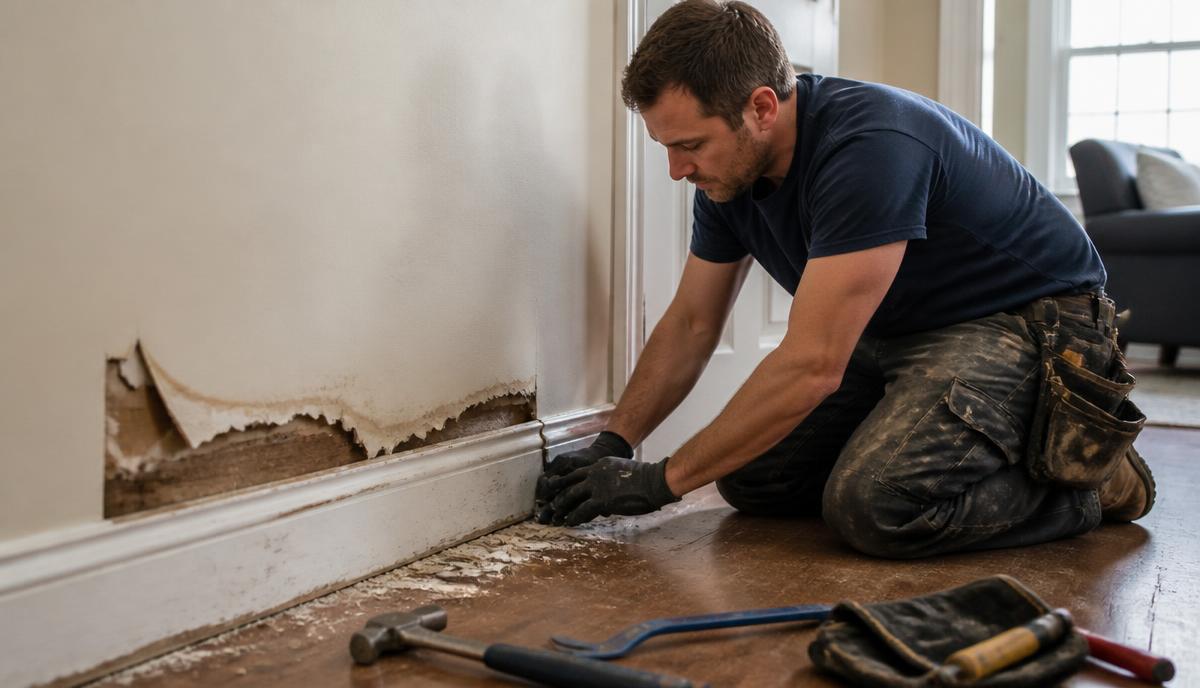
Drying saves a great deal of a building, but not all of it. Some materials lose their strength, shape, or cleanliness permanently once they are soaked, and no amount of airflow brings them back.
This guide explains how repair decisions are usually made, which materials are typically replaced, and what to look for before signing off on a scope of work.
Key takeaways
- Repairs begin after the structure is verified dry, not before.
- Porous and layered materials — carpet pad, insulation, particleboard — are usually replaced rather than dried.
- Water source and contamination level often matter more than how wet something looks.
- A written scope listing each material and its disposition prevents disputes later.
When water damage crosses into repair work
Three things push a job from drying into rebuilding: material failure, contamination, and time. A material that has swollen, delaminated, or lost structural integrity is finished. Water that carried sewage or ground contamination makes porous materials unsalvageable regardless of condition. And materials left wet long enough develop microbial growth that cannot be reliably cleaned out of a porous surface.
- Swelling, crumbling, or sagging in drywall and ceiling board
- Cupping, buckling, or separated seams in wood and laminate flooring
- Compressed or matted insulation that will not recover loft
- Persistent staining or odour after cleaning and drying
- Any porous material touched by contaminated water
Material by material
Drywall and ceilings
Drywall wets from the bottom up and holds water in its paper facing. Small, clean-water areas caught early can often be dried in place. Sagging, soft, or stained board is cut out — usually in a clean horizontal line above the water line so the replacement piece lands on framing.
Flooring
Tile over a dry slab often survives. Solid hardwood sometimes recovers if dried quickly with the right equipment. Engineered wood, laminate, and particleboard underlayment usually do not, because their layers separate when the adhesive fails.
Cabinets and trim
Base cabinets with particleboard bottoms swell from below and rarely return to shape. Solid wood trim can often be dried, refinished, and reinstalled, which is worth asking about in older homes with original millwork.
Framing and structure
Framing is durable and usually dries successfully. Structural concern arises with prolonged saturation, repeated wetting over years, or visible rot — soft spots, dark discolouration, or deflection in a floor or ceiling. That is an assessment question, not a guess.
Reading a repair scope
A useful scope lists each affected area, the materials involved, whether each is being dried, replaced, or refinished, and the reason. Vague line items like 'repair water damage' make it impossible to compare quotes or to know what was actually done.
Ask for photographs of conditions behind removed materials. Once new drywall is up, that evidence is gone, and it is exactly what an insurer or a future buyer may want to see.
Getting the sequence right
Closing a wall before the cavity is dry is the single most expensive mistake in water damage repair. New drywall over wet framing traps moisture, and the problem reappears as staining, odour, or peeling paint months later — this time with a new wall in front of it.
Insist on moisture verification before rebuild, and keep the readings.
Questions homeowners often ask
When does water damage require repairs?
When materials have physically failed, when contamination is involved, or when they stayed wet long enough that cleaning cannot restore them. Otherwise drying in place is usually preferred.
How do you know if water damage is structural?
Signs include sagging floors or ceilings, doors that no longer latch, soft framing, or visible rot. Confirming it requires exposing and inspecting the members, not judging from the surface.
Can water-damaged materials be saved?
Non-porous and semi-porous materials often can — tile, solid wood, framing, metal. Porous layered products such as carpet pad, insulation, and particleboard are usually replaced.
Local considerations for Mobile, Alabama
Slab-on-grade construction is common around Mobile, which changes flooring repair decisions: moisture can move through a slab for a long time after an event, and floor coverings installed too early may fail again.
Older neighbourhoods in and around Mobile also include raised homes with crawlspaces, where standing water and persistent humidity beneath the floor can affect subfloor and joists long before anything is visible upstairs.
When professional help makes sense
Repairs that involve framing, subfloor, ceilings, or anything load-bearing are worth having assessed by a licensed contractor rather than estimated from photographs.
For homeowners in the Mobile area, M&T Construction publishes information about restoration and building repair work following water intrusion.
Frequently asked questions
Continue reading
- When Should Wet Drywall Be Repaired or Replaced?
How to judge whether water-damaged drywall can be dried and saved or has to be cut out, including flood cuts, insulation, and what to check before closing a wall.
- When Does Water-Damaged Flooring Need to Be Replaced?
Material-by-material guidance on wet flooring — hardwood, engineered, laminate, vinyl, tile, and carpet — including subfloor checks and why the layer underneath usually decides.
- Water Damage Restoration vs. Water Damage Repair: What's the Difference?
Restoration dries and stabilises; repair rebuilds. Understand the difference, how the two phases connect, who does each, and how it affects estimates and insurance.
- Water Damage Restoration in Mobile: What Homeowners Should Know
How water damage restoration works for homes in Mobile, Alabama — the drying process, Gulf Coast humidity, storm-driven intrusion, and how to tell when a property is truly dry.
Last reviewed August 10, 2026. This guide is general educational information and is not a substitute for an on-site assessment of your property.