Water Damage Restoration
Water Damage Restoration in Mobile: What Homeowners Should Know
9 min read · Last reviewed August 12, 2026
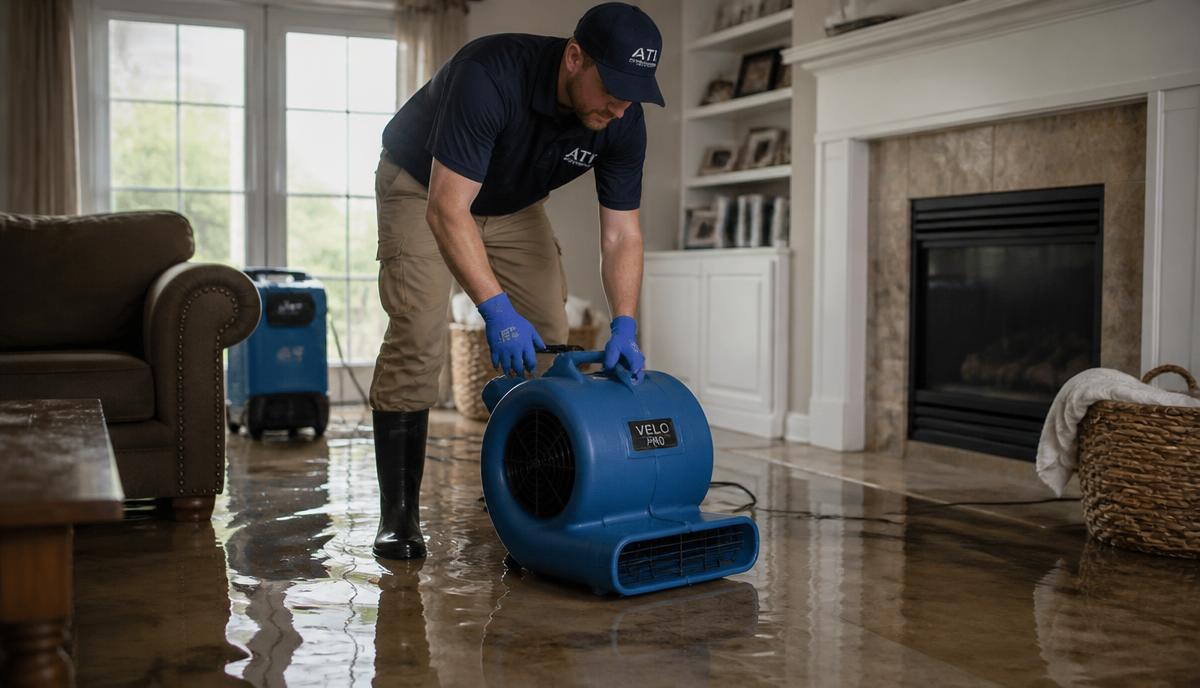
Mobile sits in one of the wettest metropolitan areas in the United States. Between summer thunderstorms, tropical systems, and month-after-month humidity, homes here deal with water intrusion that would be unusual elsewhere.
This guide explains what restoration involves, why the local climate changes how drying is handled, and what a homeowner should reasonably expect from start to finish.
Key takeaways
- Restoration means removing water, drying the structure, and verifying moisture levels — not rebuilding.
- High outdoor humidity slows natural drying, so dehumidification matters more here than in dry climates.
- Moisture readings, not appearance, decide when drying is complete.
- Documentation started on day one protects both the repair plan and any insurance claim.
What restoration actually covers
Restoration is the stabilisation phase. Its job is to stop the damage from spreading and return the building materials to their normal moisture content. That usually includes water extraction, removing materials that cannot be dried, controlled air movement, dehumidification, cleaning, and moisture monitoring.
Rebuilding — new drywall, new flooring, paint, trim — is a separate phase. Some companies do both; others only do one. Knowing the difference helps you read an estimate and understand who is responsible for what.
- Extraction: pumping and vacuuming standing water
- Removal: discarding saturated carpet pad, insulation, and unsalvageable drywall
- Drying: air movers plus dehumidifiers running continuously, often for several days
- Monitoring: daily moisture readings on affected materials
- Cleaning: wiping, sanitising, and deodorising affected surfaces
Why Gulf Coast humidity changes the approach
Drying works by moving moisture from wet materials into the air, then pulling that moisture out of the air. In a dry climate you can open windows and let the outdoor air do a share of the work. Along the Gulf Coast, outdoor air is often more humid than the indoor air you are trying to dry, so opening up the house can make things worse.
That is why local drying plans lean on closed-system dehumidification: doors and windows shut, HVAC managed, and dehumidifiers doing the heavy lifting. It also means drying may take longer here than the timelines you read in national articles.
Where water most often comes from in local homes
The source matters for two reasons. It determines whether the same event will repeat, and it strongly influences how an insurance claim is evaluated.
- Wind-driven rain forced past window flashing, door thresholds, and siding laps
- Roof leaks that only appear during sustained heavy rain or after wind lifts shingles
- Plumbing supply lines and water heaters, especially in attics and interior closets
- Appliance failures — dishwashers, washing machines, refrigerator ice lines
- HVAC condensate lines that clog and overflow during long humid stretches
- Yard drainage and grading that pushes stormwater toward the slab
A realistic timeline
For a contained loss — one room, clean water, caught quickly — extraction and setup usually happen the same day, with drying equipment running roughly three to five days. Larger losses, saturated flooring assemblies, or water inside wall cavities can take a week or more.
Rebuilding starts only after the structure passes moisture verification. Rushing that step is the most common cause of secondary problems: warped trim, bubbling paint, and musty smells that return weeks later.
How to know drying is finished
Dry does not mean 'dry to the touch'. It means the affected materials have returned to a moisture content comparable to similar unaffected materials in the same building.
Ask to see readings from a moisture meter on the affected wall, subfloor, or framing — and readings from an unaffected control area for comparison. If the numbers match and stay matched over consecutive days, the structure is dry.
Questions homeowners often ask
How quickly should water damage be cleaned up?
Start within hours. Standing water should be removed the same day, and drying equipment should be running within the first 24 to 48 hours. Delays are what turn a cleanup into a rebuild.
Can water damage get worse if left untreated?
Yes. Water wicks upward through drywall, spreads along framing, and soaks into subfloor. Materials that could have been dried in place at 24 hours often have to be removed after several days.
What happens during a water damage inspection?
An inspector traces the source, maps how far the water travelled using moisture meters and sometimes thermal imaging, classifies the water type, and documents affected materials with photos and readings.
Local considerations for Mobile, Alabama
Mobile averages well over 60 inches of rain a year, concentrated in intense events rather than steady drizzle. Roofs and drainage systems here are tested by volume and wind at the same time.
Tropical systems add a second problem: power interruptions. Without electricity, dehumidifiers do not run, and a house that was merely wet becomes a house with a humidity problem. Homeowners in storm-prone areas benefit from knowing in advance how they would power drying equipment or move belongings to a dry space.
- Check ceilings and window headers after every sustained storm, not just after visible leaks
- Keep gutters and downspout extensions clear before hurricane season, not during it
- Watch crawlspaces and slab edges after periods of heavy, repeated rainfall
When professional help makes sense
If water has reached building materials — flooring assemblies, drywall, ceilings, insulation, or framing — a professional assessment is usually the practical next step, because those materials hide moisture that surface inspection misses.
Homeowners in Mobile, Alabama can read more about how storm and water damage restoration work is handled locally through M&T Construction.
Frequently asked questions
Continue reading
- What Happens During the Water Damage Restoration Process?
A step-by-step walkthrough of the water damage restoration process: inspection, water classification, extraction, removal, drying, monitoring, and clearance.
- Water Damage From Heavy Rain and Storms: What Homeowners Should Check
How wind-driven rain and storms get water into a building, the checks to run after severe weather, and practical steps to reduce repeat storm-related water intrusion.
- Water Damage Repairs in Mobile AL: When Restoration Is Not Enough
Understand when water-damaged materials need repair or replacement rather than drying — drywall, flooring, ceilings, and structural components — with local context for Mobile, Alabama.
- What Homeowners Should Know About Water Damage and Insurance Claims
How water damage claims are generally evaluated, the difference between sudden damage and gradual leaks, what to document, and the order of steps that protects your claim.
- Water Damage Restoration Cost in Mobile, AL: What Homeowners Should Know
Understand what drives water damage restoration costs in Mobile, Alabama — from extraction and drying to hidden moisture, materials, insurance, and how to read an estimate.
Last reviewed August 12, 2026. This guide is general educational information and is not a substitute for an on-site assessment of your property.