Storm & Rain Damage
Water Damage From Heavy Rain and Storms: What Homeowners Should Check
8 min read · Last reviewed August 13, 2026
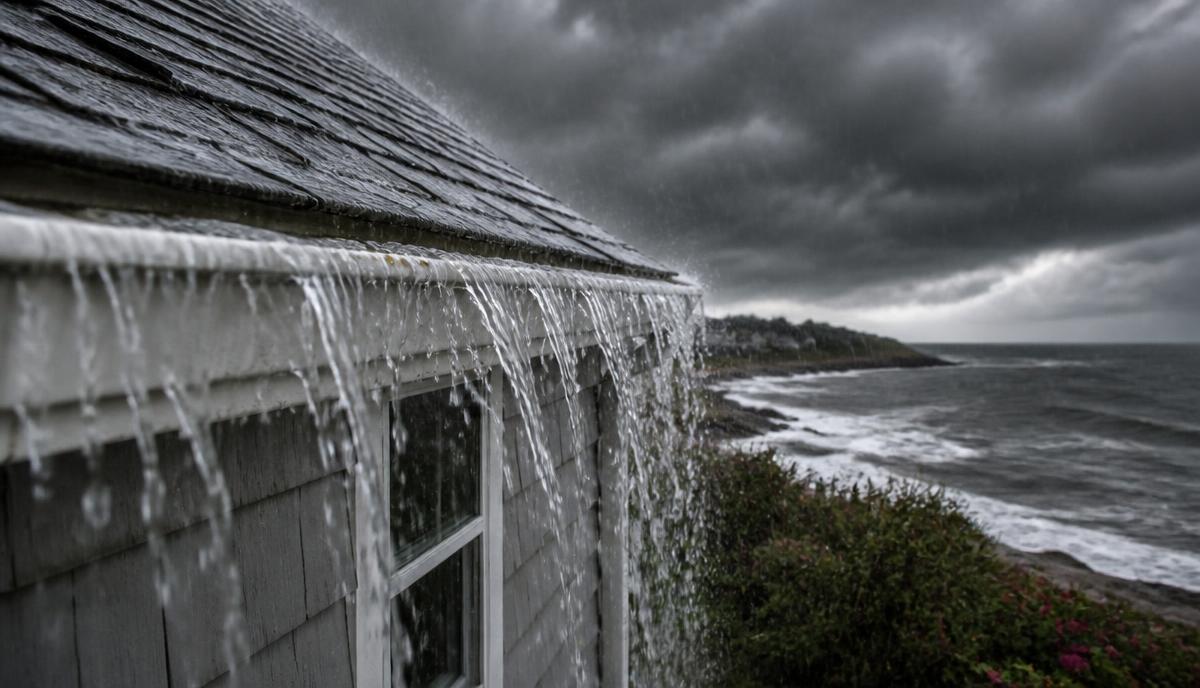
A roof that sheds a normal shower can still let water in during a storm. Wind changes the physics: rain arrives horizontally, pressure differences push water uphill through laps and joints, and drainage systems that work at low volume overflow at high volume.
This guide covers how storm water gets in and what to inspect afterwards.
Key takeaways
- Wind-driven rain enters through joints and laps designed only for gravity-fed water.
- Storm leaks often appear a day or two later, away from the entry point.
- Check the attic and window headers after every major storm, not just when you see a stain.
- Gutters, downspout extensions, and grading are the cheapest defences you have.
How storm water gets in
Pressure matters as much as volume. Wind creates a pressure difference across the building envelope that can drive water upward through overlaps that never leak in still rain.
- Wind-driven rain forced under shingle edges, siding laps, and door thresholds
- Lifted or missing shingles exposing underlayment or bare deck
- Failed flashing at chimneys, skylights, valleys, and roof-to-wall junctions
- Clogged or undersized gutters overflowing back against the fascia and wall
- Downspouts discharging beside the foundation instead of away from it
- Blocked or backed-up drains and window wells
- Failed sealant at window and door perimeters
- Roof vents, boots, and penetrations that have dried out and cracked
The post-storm walkthrough
Inside
- Ceilings, especially below roof valleys and bathrooms
- The top corners of windows and above exterior doors
- Wall/ceiling junctions on the windward side of the house
- The attic: stained sheathing, wet insulation, daylight at penetrations
- Behind furniture on exterior walls, and along the base of walls
- A humidity reading in each affected room, compared to the rest of the house
Outside
- Missing, lifted, or creased shingles and displaced ridge caps
- Debris in gutters and valleys; standing water at downspout outlets
- Soil washed away from the foundation, or pooling within a few feet of it
- Damaged soffit, fascia, and siding, particularly at corners
- Crawlspace vents and access doors for standing water inside
Why leaks show up late
Water entering at the roof runs along rafters or the top of insulation until it finds a low point or a penetration — a light fixture, a vent, a seam. It can travel a long way horizontally before it appears.
Absorbent materials also buffer the water before releasing it. A ceiling stain that appears two days after a storm often reflects entry during the storm, not a new leak.
Reducing the risk before the next one
- Clear gutters and confirm downspouts discharge several feet from the foundation
- Have flashing and sealant inspected annually rather than after failure
- Trim limbs that overhang or contact the roof
- Regrade so soil slopes away from the building
- Consider water alarms in low points and near mechanical equipment
- Know where and how to shut off the water and the affected electrical circuits
Questions homeowners often ask
Can heavy rain cause water damage inside a home?
Yes. Prolonged, high-volume rain overwhelms drainage and finds envelope weaknesses that never leak during light rain.
How does wind-driven rain enter a home?
Wind creates pressure that pushes water sideways and upward through laps, joints, and small gaps that were designed to shed gravity-fed water only.
Can tropical storms cause water damage?
Frequently — through roof damage, wind-driven rain, drainage overload, and power loss that stops sump pumps and dehumidifiers from running.
What should homeowners check after severe rain?
Ceilings, window headers, the attic, the crawlspace, gutters and downspouts, and the ground around the foundation.
Gulf Coast and Mobile-area considerations
Coastal Alabama combines heavy annual rainfall, tropical systems, and high humidity. Rain events here often arrive with wind, so envelope weaknesses that would be tolerable inland get tested every season.
Power interruption is part of the risk. When electricity is out, drying stops, and a wet house in humid air deteriorates quickly. Planning for that — knowing what you would move, cover, or power — is as useful as any repair.
When professional help makes sense
After a significant storm, damage to roofing, flashing, and building materials is often better assessed by a contractor with roof and structure experience than judged from ground level.
In the Mobile area, information about storm-related water damage response and building repairs is available from M&T Construction.
Frequently asked questions
Continue reading
- Common Causes of Water Damage in Alabama Homes
The recurring sources of water damage in Gulf Coast and Alabama homes — roofing, plumbing, appliances, HVAC condensate, drainage, and humidity — and what each one looks like early.
- Water Damage Restoration in Mobile: What Homeowners Should Know
How water damage restoration works for homes in Mobile, Alabama — the drying process, Gulf Coast humidity, storm-driven intrusion, and how to tell when a property is truly dry.
- What Homeowners Should Know About Water Damage and Insurance Claims
How water damage claims are generally evaluated, the difference between sudden damage and gradual leaks, what to document, and the order of steps that protects your claim.
- How to Prevent Recurring Water Damage
A practical maintenance approach to stopping repeat water damage: seasonal checks, plumbing and appliance upkeep, drainage, leak detection, and knowing your shutoffs.
Last reviewed August 13, 2026. This guide is general educational information and is not a substitute for an on-site assessment of your property.