Homeowner Checklists
Water Damage Checklist for Homeowners
5 min read · Last reviewed August 15, 2026
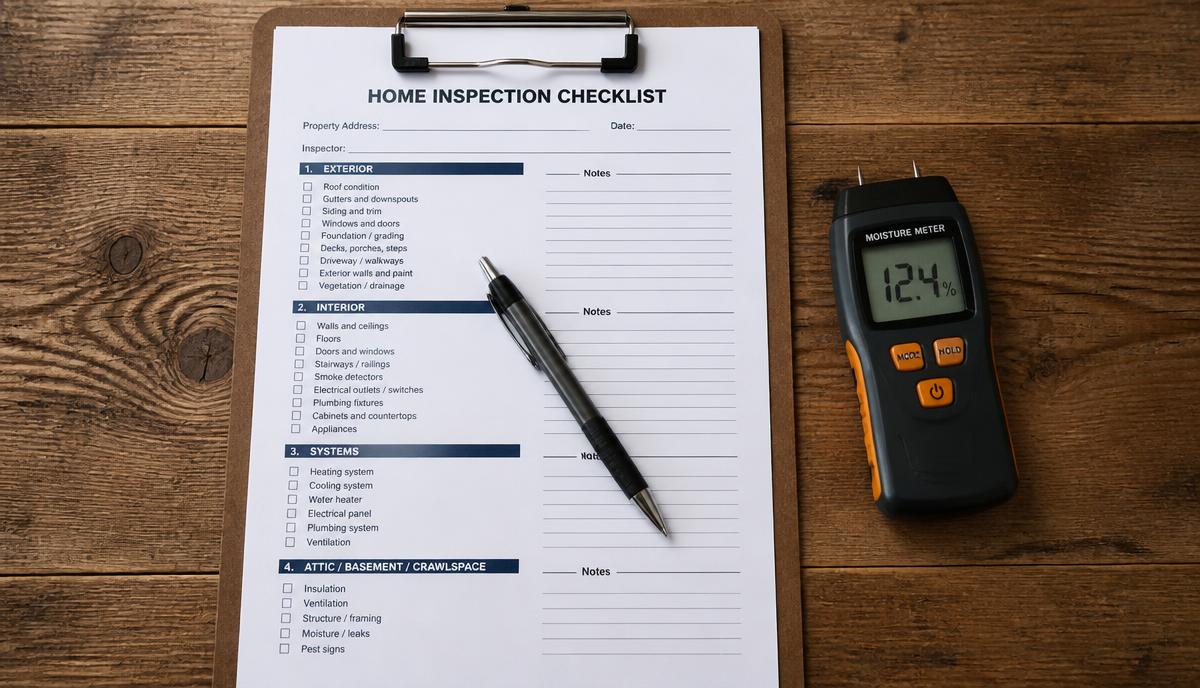
Print this, or keep it on your phone. It is designed to be worked through in order during and after a water damage event.
Key takeaways
- Safety, source, documentation, drying — in that order.
- Document before you clean, not after.
- Keep every receipt and every reading.
- Do not rebuild until moisture readings confirm the structure is dry.
Immediately (first hour)
- Cut power to affected circuits if it can be done safely from a dry position
- Keep people and pets out of standing water and away from sagging ceilings
- Shut off the water at the fixture valve or the main
- Identify the source if it is visible and safe to inspect
- Take wide, mid, and close-up photos of everything before moving it
First few hours
- Record a narrated video walkthrough with the date
- Remove standing water with a pump, wet vacuum, mops, or towels
- Lift rugs; move furniture off wet flooring or place blocks under legs
- Move contents, documents, and electronics to a dry area
- Start air movement and run a dehumidifier with the space closed
- Call your insurer and ask what mitigation they expect
First 24 hours
- Remove wet carpet pad and saturated insulation if accessible
- Open cabinet doors and cavity access points so air can reach wet areas
- Write an inventory of damaged contents with age and approximate value
- Keep every receipt for supplies, rentals, and lodging
- Arrange professional assessment if water reached walls, floors, or ceilings
Days 2 to 7
- Keep drying equipment running continuously, including overnight
- Take or request daily moisture readings at the same marked points
- Compare readings against an unaffected control area
- Watch for musty odour, staining, or new soft spots
- Meet the adjuster on site if a claim was filed; share photos and readings
Before rebuilding
- Confirm affected materials match control readings and hold steady
- Photograph open cavities and framing before anything is closed
- Confirm the source is repaired and tested
- Get a written scope listing each material and whether it is dried, replaced, or refinished
- Keep the final drying report with your property records
Follow-up at 30 and 90 days
- Re-check the area for staining, odour, or paint changes
- Check adjacent rooms and the floor below
- Confirm humidity in the room matches the rest of the house
- Add the failure point to your seasonal maintenance list
Frequently asked questions
Continue reading
- What to Do in the First 24 Hours After Water Damage
A clear, ordered plan for the first day after discovering water damage: safety, stopping the source, documentation, extraction, and the decisions that affect your insurance claim.
- What Homeowners Should Know About Water Damage and Insurance Claims
How water damage claims are generally evaluated, the difference between sudden damage and gradual leaks, what to document, and the order of steps that protects your claim.
- How to Prevent Recurring Water Damage
A practical maintenance approach to stopping repeat water damage: seasonal checks, plumbing and appliance upkeep, drainage, leak detection, and knowing your shutoffs.
- What Happens During the Water Damage Restoration Process?
A step-by-step walkthrough of the water damage restoration process: inspection, water classification, extraction, removal, drying, monitoring, and clearance.
Last reviewed August 15, 2026. This guide is general educational information and is not a substitute for an on-site assessment of your property.